-
PERSPETIVA DA VÍTIMA
INTRODUÇÃO E DEFINIÇÕES1 Topic -
HISTÓRIA DA VÍTIMA/SOBREVIVENTE11 Topics
-
IMPACTO DO CRIME I – Necessidades e direitos das vítimas6 Topics
-
IMPACTO DO CRIME II – trauma das vítimas4 Topics
-
IMPACTO DO TRAUMA NA VÍTIMA3 Topics1 Quiz
-
EmpathyINTRODUÇÃO7 Topics
-
A BIOLOGIA DA EMPATIA/neurociência social3 Topics
-
COMPETÊNCIAS DA EMPATIA7 Topics1 Quiz
-
Effective CommunicationINTRODUÇÃO1 Topic
-
MODELOS DE COMUNICAÇÃO3 Topics
-
A IMPORTÂNCIA DO RUÍDO2 Topics
-
COMUNICAÇÃO NÃO VERBAL6 Topics
-
BARREIRAS À COMUNICAÇÃO EFICAZ5 Topics
-
O QUE É UMA COMUNICAÇÃO EFICAZ?5 Topics
-
ESCUTA ATIVA4 Topics
-
COMPETÊNCIAS DE COMUNICAÇÃO EFICAZ: Preste atenção aos sinais não verbais / Mantenha o stresse sob controlo5 Topics
-
COMUNICAÇÃO EFICAZ COM VÍTIMAS TRAUMATIZADAS3 Topics1 Quiz
Participants 1266



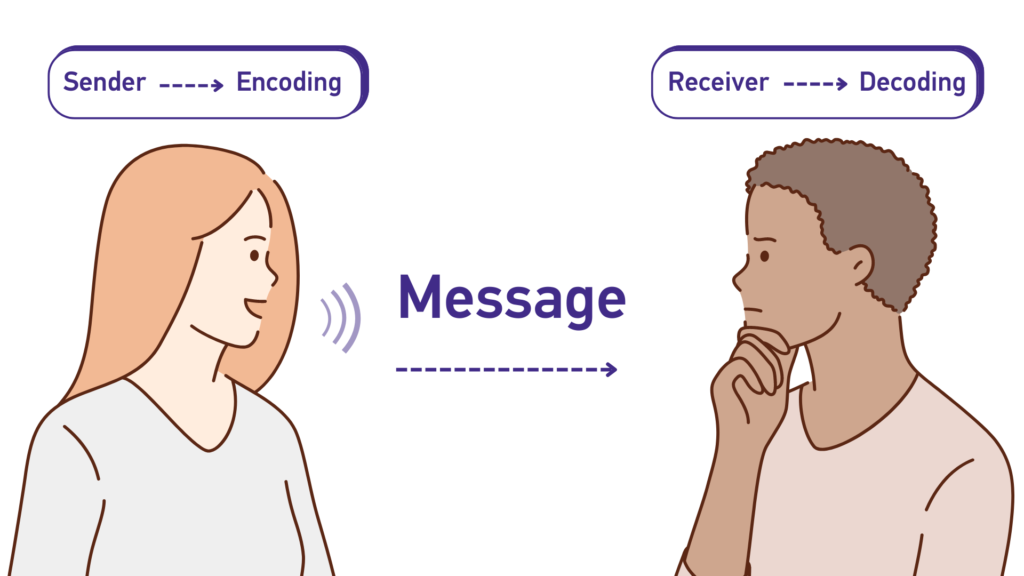
The Shannon-Weaver model was criticized because it assumed that communication always occurred linearly. Wilbur Schramm (1954) suggested a new model, which regards Communication as a process between an encoder and a decoder.
He saw communication as a reciprocal process, where the message is very important. This model put emphasis on how people interpret the message sent. Schramm argued that a person’s background, experience, and knowledge are factors that impact the interpretation of the message.
Schramm believed that the decoder must send feedback about the message to indicate that the message has been received. He argued that communication is incomplete unless there is feedback from the receiver. According to Schramm’s model, encoding and decoding are vital to effective communication.